
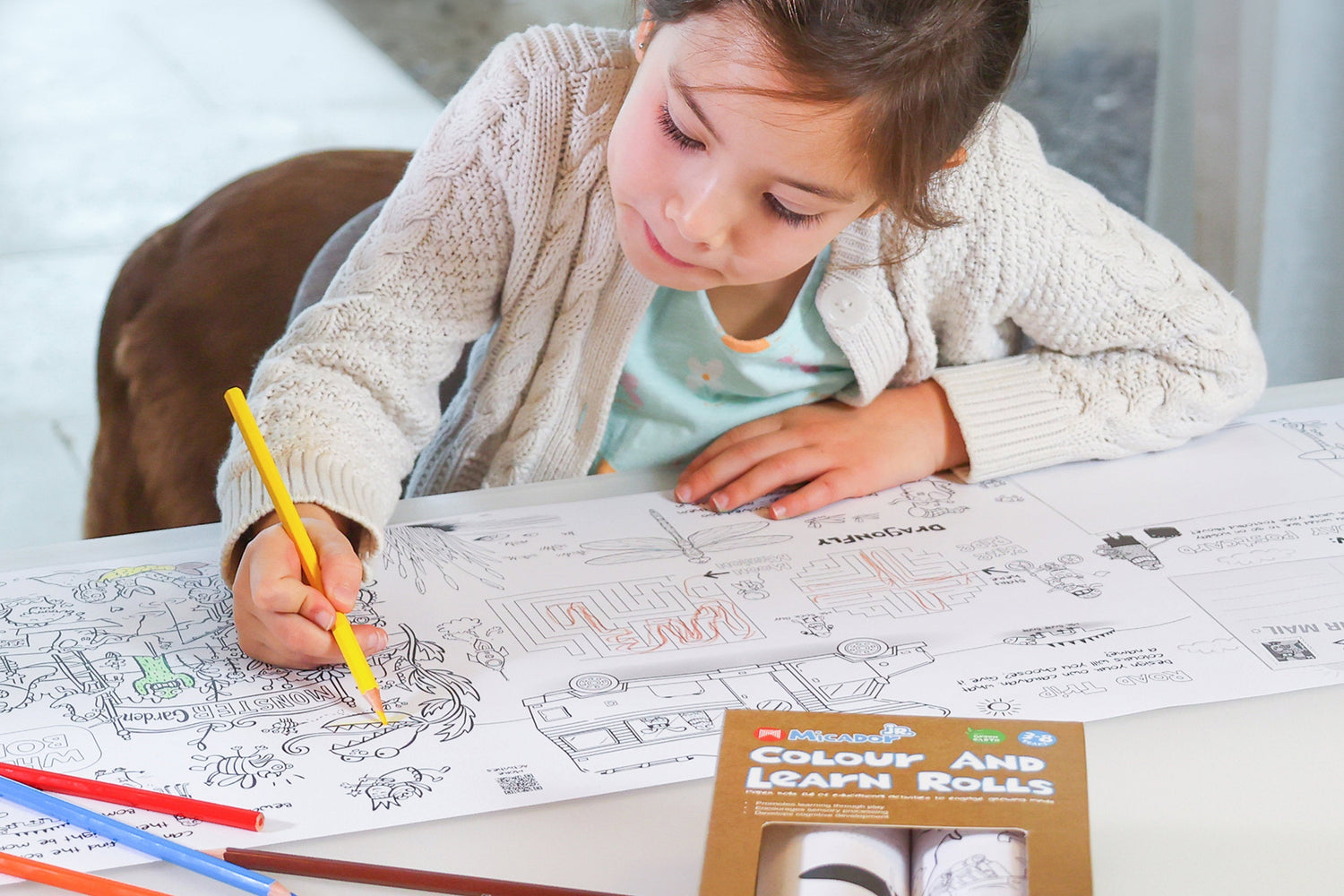
The Victorian Early Years Learning and Development Framework isn't a series of separate boxes to tick. It's a way of thinking about how children learn. And art isn't one activity tucked away in the creative corner. It's woven through all five learning outcomes, naturally, if you know where to look.
This guide maps art activities directly to each VEYLDF outcome. It shows you how to design experiences that hit learning goals while building the environment that makes art learning work. And it covers the documentation piece, because if you're creating beautiful learning experiences but can't show what children have learned, you haven't actually met the framework requirement.
The biggest shift in thinking: stop separating "art time" from "learning time." In early childhood, they're the same thing.
The Five VEYLDF Outcomes and What Art Brings to Each
The VEYLDF defines five learning outcomes for children across birth to age eight. Each one is supported by specific practices, and art sits directly in all of them.
Outcome 1: Children Have a Strong Sense of Identity
Identity is built through experiences where children make choices, see their work valued, and develop confidence in their own thinking.
Art activities that support identity include self-portraits and self-exploration. A child paints their own face or makes a collage about "all about me." They're not trying to create a realistic likeness. They're exploring "what do I look like" and "what matters to me." The process is the learning.
Colour preference work directly supports identity too. Ask a child "which colour is your favourite" and they're making a personal choice and claiming it. Create a display titled "Our Favourite Colours" where each child adds their preference. That's documentation of identity development.
Family painting and storytelling through art also build identity. A child draws their family, or paints a scene from home. In conversation, they describe it. "This is my mum. She's blue because she likes blue." That's connecting visual representation with personal meaning.
The documentation practice: take photos of the artwork. Add a simple annotation capturing the child's own words: "I made this because I like dinosaurs." File these in the child's learning portfolio. That's identity learning visible and documented.
Outcome 2: Children Are Connected With and Contribute to Their World
Connection happens through shared creative experiences and understanding broader communities.
Group murals are the classic example. A long sheet of paper. All children can access it. Over several days, each child adds marks, shapes, colours. The mural is a shared creation. It shows that individual contribution creates something larger. The child experiences "my mark is part of something bigger."
Collaborative projects also build connection. A group painting where each child contributes one element. A community artwork about "our garden" or "our neighbourhood." The focus shifts from the individual product to the community experience.
Cultural art exploration supports connection too, but with care. Rather than copying Indigenous dot paintings or other cultural art forms, explore the underlying ideas. Storytelling with natural materials. Earth colours. Marks that represent meaning. The respect for culture comes through understanding purpose, not imitation.
Documenting connection: photograph the group artwork. Write brief notes about who participated, what was created together, what the child said about their contribution. "Emily helped paint the trees in our garden mural. She said, 'I made big green circles so the leaves are bushy.'"
Outcome 3: Children Have a Strong Sense of Wellbeing
Wellbeing includes physical development, emotional regulation, and sensory integration. Art is one of the most accessible wellbeing tools.
Sensory art directly supports this. Finger painting. Playdough exploration. Mixing paint colours and watching them blend. Tearing paper. These activities activate multiple sensory systems simultaneously. Vision, touch, proprioception (knowing where your body is in space), vestibular system (movement and balance). A child who regularly engages in sensory art develops stronger sensory integration, which supports everything from handwriting to emotional regulation.
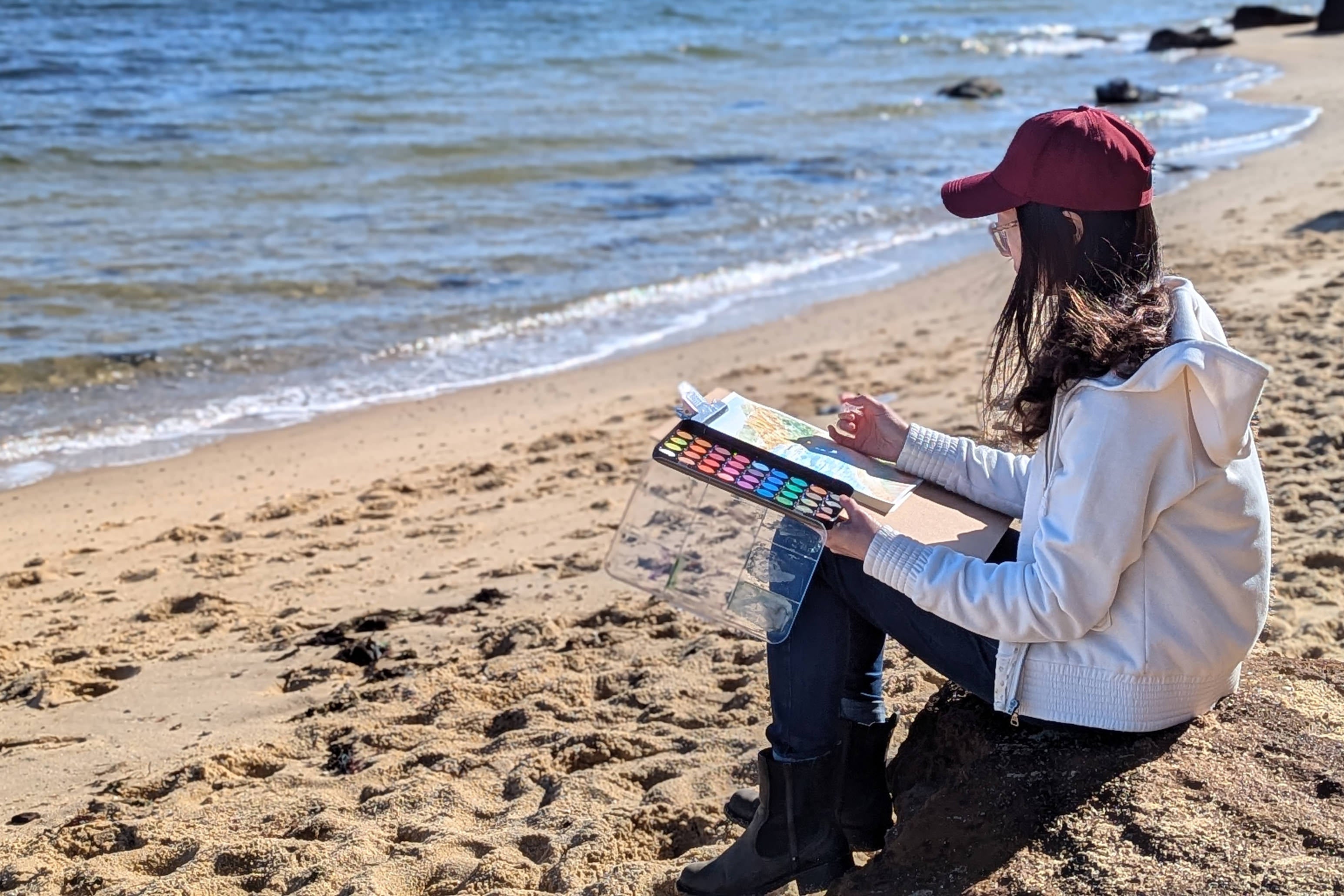
Calming art activities support emotional wellbeing. Watercolour painting is inherently calming. The slow, flowing movement. The soft colours. The way water and pigment blend. For children who struggle with anxiety or big emotions, watercolour offers a tool for regulation. The process itself is soothing.
Physical development through art is often overlooked. Cutting with scissors builds fine motor strength and hand-eye coordination. Tearing and crumpling paper develops hand dexterity. Holding a crayon at different angles (standard grip, sideways for shading, vertical for dots) strengthens the small muscles in the hand. These aren't separate physical development activities. They're art.
For documentation: note the sensory engagement. "Leo spent 12 minutes with finger paint today, exploring different hand movements. He pressed hard, made light strokes, and mixed colours. His sensory exploration built hand strength and coordination." That's genuine wellbeing learning, documented.
Outcome 4: Children Are Confident and Involved Learners
Confidence in learning comes through experimentation, problem-solving, and the safety to try and fail.
Art is the primary vehicle for this. A child experiments with mixing two paint colours. What happens? They discover orange. They try again with different colours. A different result. They've learned through trial and error. They're comfortable being uncertain because the process is safe.
Problem-solving through art: "This crayon is broken. What can I do?" The child discovers they can use the broken piece. Or find a different colour. Or ask for help. They're developing resilience and creative problem-solving, naturally.
Introducing simple techniques gradually builds confidence. Show how to hold a brush. Demonstrate blending colours. Introduce scissors properly. The child watches, tries, gets feedback. Tries again. The skill develops, and with it, confidence.
Mathematical thinking in art often surprises educators. Pattern (stripes, repeats), shape (circles, triangles), symmetry (matching sides), scale (big and small), counting (how many dots)—all of these emerge naturally in art exploration. A child drawing with shapes is exploring mathematical concepts without formal instruction.
Documenting learning: capture the learning progression. "Week 1: Maia explored finger paint freely. Week 2: She used her whole hand. Week 3: She began making intentional marks. Week 4: She mixed colours deliberately." That's documented progression showing growing confidence.

Outcome 5: Children Are Effective Communicators
Communication includes talking about work, using symbols to represent meaning, and developing literacy foundations.
Mark-making is pre-literacy. The earliest marks on paper precede letter formation. A child who regularly makes marks develops the fine motor foundation and hand-eye coordination needed for writing later. That's communication development in its foundation stage.
Visual storytelling supports communication. A child creates a sequence of artwork. "First I painted the sun. Then I painted rain. Then I painted a puddle." They're using visual representation to tell a story. They're communicating through image.
Describing artwork builds oral language. During group time, a child talks about their work. "I used blue and yellow. I mixed them and made green." They're using colour language, describing a process, and learning to articulate their thinking. That's language development.
Symbolic representation is crucial. A wavy line represents water. A circle with lines becomes a person. A dot represents something important. The child has made the connection between mark and meaning. That's the cognitive leap that underlies literacy.
For documentation: record the child's own words about their artwork. "I made this painting. The red is the car. The yellow is the sun. The blue is the road." Write this verbatim, with the photo. That's communication development captured.
Child-Directed Play as the Primary Vehicle
Here's where most programming goes wrong: educators underestimate child-directed play and overload with adult-led activities.
The evidence from developmental research is clear. In the early years (birth to four), 60 to 80 per cent of learning should happen through child-directed play. The child leads. The adult observes, responds, and gently extends. The four-to-six age group shifts to 50 to 60 per cent child-directed, with more guided and adult-led activity. By six to eight, the balance is more even.
Child-directed art means: materials are available. The child chooses what to use, how long to spend, what to create. The adult doesn't give instructions. They ask questions. "What are you trying?" "What happened when you mixed those colours?" "What do you want to try next?"
This is harder than adult-led art because there's no control. The child might paint for thirty seconds and walk away. That's fine. It's their choice, their learning. Your job is to support that autonomy and observe what's being learned.
In practice, this looks like: a permanent art station with materials accessible to the child (low shelves, clear containers, easy reach). Paints, markers, crayons, paper always available. The child accesses when they want. Some days they create for twenty minutes. Other days they don't visit the art station. That variation is appropriate and healthy.
Guided play sits between child-directed and adult-led. The child chooses to participate. But the adult sets a gentle constraint or suggestion. "Today we have paint and leaves. What could you explore?" The child decides what to do with the leaves. Maybe they paint them. Maybe they press them into paint and stamp. Maybe they just look at them. The adult guides the invitation but not the outcome.
Adult-led art is structured instruction. Teach a specific technique. Demonstrate watercolour blending. Show scissor safety. Introduce a new tool. This is appropriate and important, but it should be the smaller portion of art time, not the default.
Designing the Environment for Art Learning
The physical space where art happens matters more than most educators realise.
Accessibility is foundational. Art materials should be child-height, in clear containers, with visual labels (picture plus word). A child can see what's available and access it independently. Store together logically: all markers in one container, all crayons in another, paper on a low shelf. If a child has to ask an adult for materials every time, that breaks the autonomy of child-directed play.
Natural light is better than fluorescent. Colours look different under artificial light. If your space is lit by overhead fluorescents, it affects how a child perceives colour mixing and sees their own work. Position art stations near windows where possible. If not possible, acknowledge that colour perception in your space will be different, and adjust your thinking accordingly.
Separate wet and dry zones. Wet activities (paint, water-based marker work) happen at a table with water access. Dry activities (drawing, collage with scissors) happen elsewhere. This reduces water on unintended surfaces and allows faster transitions.
Display all work, not some work. When only the "best" artwork goes on the wall, children who see their work displayed feel valued. Those who don't see a clear message: not your work. Display everything, equally, at child height so children can see their own contributions.
Include mirrors and reflective surfaces. For identity exploration and self-awareness, mirrors are essential. A child painting their own face benefits from seeing a reflection. A sheet of reflective material on the wall allows children to see their artwork and themselves together.
Protect surfaces and plan for mess. Art is messy. That's not a problem to solve; it's part of the process. Use washable materials, accept that paint will splash, and provide cleanup systems that children can manage independently. Paper towels, a bucket for water-logged materials, a bin for scraps.
The Documentation Framework
Here's the gap many educators face: they're creating beautiful learning experiences but struggling to show that learning happened. VEYLDF requires evidence. That evidence comes through documentation.
Documentation is not a separate task. It's observation and note-taking integrated into the lesson itself, plus photo capture.
During the art activity: Circulate. Watch what each child does. Note one observation per child. Not a paragraph. One sentence. "Yasmin mixed colours deliberately, testing blue plus yellow." "Marcus explored the smooth and rough sides of the paper." "Sophia persisted with the scissors for five minutes." Write these notes immediately after while memory is clear.
Take photos. One photo per child if possible, showing their work and engagement. Photo plus one-line observation creates the learning documentation.
Record the child's voice. Ask a simple question. "Tell me about your artwork." Write what they say, word-for-word. "I made red and blue and they made purple and I like purple." That's the child's own explanation of their learning.
Connect to the outcome. Look at the observation and child's words. Which VEYLDF outcome does it show? "Yasmin's deliberate colour mixing shows Outcome 4: Confident Involved Learners. She tested a hypothesis and learned a new concept."
That's documentation. Observation plus photo plus child's voice plus outcome connection equals evidence that learning happened.
File these in a learning portfolio, digital or physical. Over weeks and months, patterns emerge. The portfolio shows growth, development, learning across the five outcomes. That's what the framework asks for.
Product Fit: Supporting Inclusive Art Learning
The early stART range (designed for ages one to four) and Micador jR. range (ages three to eight) exist specifically to support VEYLDF learning because they're designed around developmental stages.
Early stART products have chunky grips that match the grip development of one to two-year-olds. The Easy Grip design supports the power grasp stage. Colours are bold and easily visible. Non-toxic, washable, designed for sensory exploration.
For older preschoolers (three to five), Micador jR. products offer the next grip stage with Secure Grip options. Fine motor control is developing. Washable paints support the mess that's part of learning. The range grows with the child.
These aren't incidental details. Grip design directly impacts whether a child can actually engage with the material. A three-year-old trying to hold a standard pencil experiences frustration, not learning. The right tool at the right developmental stage removes barriers and allows learning to happen.
Aboriginal and Torres Strait Islander Cultural Inclusion
Respectfully including Aboriginal and Torres Strait Islander art perspectives strengthens the entire program.
The key principle: inclusion, not imitation. Children don't copy dot paintings or create mock Indigenous art. Instead, explore the underlying practices and values.
Natural materials and earth colours reflect Aboriginal connection to country and environment. Children explore ochre, clay, charcoal, plant materials. They're engaging with the same materials and colour palettes without copying specific art forms.
Storytelling traditions are universal. Aboriginal stories told through art, sand art, and body art reflect the communication power of visual art. Children tell their own stories through visual means. They learn that art is a language.
Country and connection matter. A visit to a local park becomes "our country." Children create art about the trees they see, the water, the animals. The place matters. That mirrors Aboriginal respect for specific Country.
Work with Aboriginal artists and communities if possible. A visiting artist who can explain and demonstrate respectfully creates learning that imitation never can. The respect comes through genuine relationship, not tokenism.
Documentation note: "The children explored natural clay and earth-coloured paint while learning about Aboriginal connection to Country. They created artwork inspired by the local park we visited."
Assessment: Looking for Learning
Process-focused assessment questions shape what you look for:
"What materials did this child choose?"
"How long did they engage?"
"Did they try something new?"
"What did they say about their work?"
"How did they problem-solve when something didn't work?"
You're assessing engagement, choice-making, persistence, and problem-solving. Not artistic skill or neatness.
A checklist that works:
Child chose materials independently? (Yes/No) Engaged in the activity for more than five minutes? (Yes/No) Made intentional choices about colour or shape? (Yes/No) Described their own work? (Yes/No) Responded to a challenge by trying again? (Yes/No)
That checklist, repeated over time, shows development across Outcome 4 (Confident Learners) and Outcome 5 (Communicators). That's assessment that matters.
The Observation Lens: What to Notice
As you circulate during art time, here's what matters:
Grip development: How is the child holding the tool? Is it age-appropriate? Is the hand relaxed or clenched? Tension suggests difficulty.
Sensory engagement: Is the child focused on the feel of the material (sensory), watching the mark appear (visual-motor), or creating an intentional image (representational)?
Decision-making: Is the child making choices (colour, material, pressure) or just making marks randomly?
Problem-solving: When something doesn't work (brush too wet, paint too thin, can't hold something), what does the child do? Ask for help? Try a different approach? Give up?
Communication: Does the child talk about their work? Describe what they're doing? Explain choices?
These observations, noted and documented, show learning across all five outcomes.
When Art Activities Don't Work
Some common issues and practical fixes:
The child who sits and does nothing. Usually means either the task is too open (paralyzing) or they're uncomfortable. Offer constraint: "Use only blue." Offer a role: "Can you be the water monitor?" Sit beside them and work quietly. Sometimes proximity and silence are enough.
Materials are a free-for-all. System failure. Establish a clear routine. "We get one colour. When we're finished, we put it back." Practise the routine separately from the art activity. Routine first, then creativity.
The child won't wash hands. Make cleanup part of the routine, not an afterthought. "Paint, then wash, then we're done." Establish it early and consistently.
Too much mess and stress. Adjust the setup. Use less water. Use washable materials. Protect surfaces better. Accept that art creates mess. That's not failure; it's evidence of engagement.
The Bottom Line
Teaching art through the VEYLDF isn't adding something new to your day. It's recognising that art is already supporting all five learning outcomes. The shift is in how you document it.
Provide accessible materials. Observe what children learn. Take photos. Record their words. Connect to outcomes. That's the framework working.
The art isn't extra. It's exactly where development is meant to happen.
Ask Klumpf about VEYLDF outcomes, lesson planning for early years, or aligning art to the framework. Micador's in-house art expert. Bottom-right of every page.]
Next in this series: "Art Therapy vs Therapeutic Art: What's the Difference and Why It Matters"
© 2026 Micador Group. All rights reserved. This article is original editorial content produced by Micador. You're welcome to link to it or quote short passages with attribution. Reproducing the article in full, or republishing it on another platform, requires written permission — amazing@micador.com.au.

Leave a comment
All comments are moderated before being published.
This site is protected by hCaptcha and the hCaptcha Privacy Policy and Terms of Service apply.