
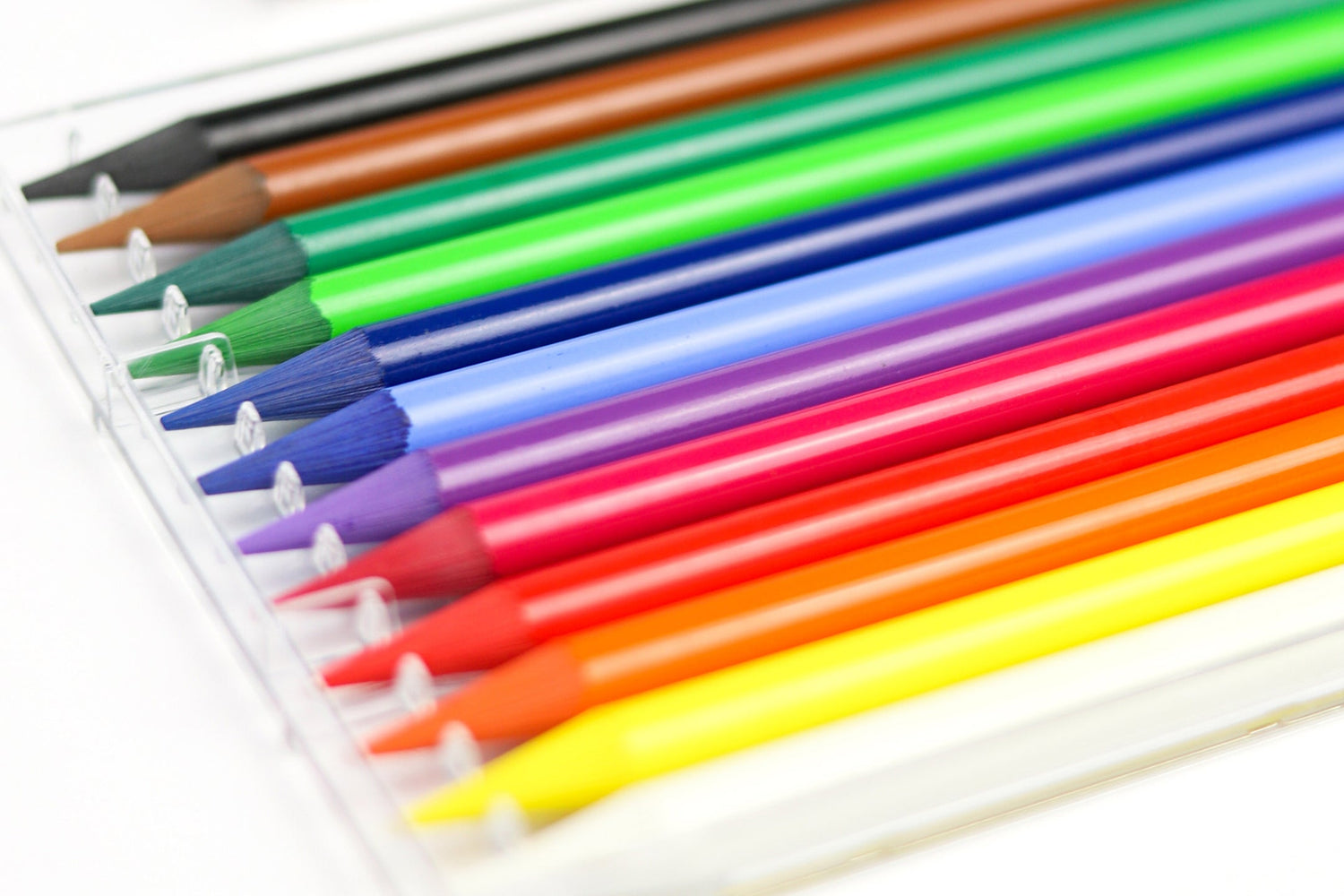
The Beginning: A Viennese Invention
It's 1790. Vienna. Josef Hardtmuth, a court architect, sits down with an idea that will change art forever. He's not thinking about revolution or legacy. He's thinking about a problem: pencils at the time are temperamental. Pure graphite wrapped in wood, inconsistent, fragile, expensive. Not reliable enough for precision work. Not affordable enough for students.
Hardtmuth starts experimenting in his workshop. What if you could blend graphite with clay? What if you could fire this mixture in a kiln, the way potters do? He doesn't know yet that his answer will become the foundation for every pencil made today, 230 years later.
By 1802, his patent is granted. The graphite-clay formula works. The hardness is controllable. The consistency is reliable. Suddenly, you could make a pencil that behaves the same way every single time. For an architect, an artist, a student, this was revolutionary in the truest sense. Not in the marketing sense. In the actual, problem-solving sense.
This single innovation—the discovery that graphite and clay, when fired together, create a material that's both flexible and dependable—became the principle that every pencil manufacturer on Earth still uses today. Whether it's Faber Castell, Staedtler, Crayola, or the pencil in your studio right now, the core technology comes from Hardtmuth's 1802 patent.
The System That Became Standard
Hardtmuth's grandson, Friedrich von Hardtmuth, inherited not just a company but a responsibility. By 1888, he'd been watching artists, engineers, and designers work with pencils for decades. He noticed what they all needed: a way to know what hardness they were picking up. Artists might want a softer pencil for sketching. Architects needed harder pencils for precise lines. Students learning to write needed something in between.
Friedrich created the grading system. H for Hardtmuth. B for Budějovice. F for Franz. A scale from 9H (hardest) through F (firm) to 9B (softest). It's logical. It's intuitive. It works across languages.
Here's what makes this remarkable: that grading system didn't stay proprietary. It didn't become a competitive advantage that Hardtmuth guarded jealously. Instead, it became the global standard. Every pencil manufacturer adopted it. Today, when you walk into an art supply shop anywhere in the world, you see the same grading system. HB. 2B. 4B. 6B. That's Hardtmuth's system, still working exactly as intended, 135 years later.
This is what separates a company from a legacy. Hardtmuth didn't just make good pencils. They solved problems in a way that benefited everyone, and the whole industry adopted their solution. That's institutional excellence.
The Name: Aspirational Excellence
A pencil called Hardtmuth is a fine name. Direct. Honest. But the company wanted something that spoke to what the pencils represented: excellence at its highest level. Brilliance. Reliability. Permanence.
They named it after the Koh-I-Noor diamond. One of the world's largest and most famous gemstones, a stone with history that spanned centuries and continents. A gem so perfect, so rare, that it had been the subject of legend and desire across cultures. To name a pencil after the Koh-I-Noor was to say: we're making something that lasts, something that's trusted absolutely, something that belongs in the hands of anyone serious about their craft.
The name carried weight without needing to say anything. It simply meant quality. It still does.
The Elephant: Trademark of Continuity
In 1896, the company registered their now-iconic elephant trademark. One of the oldest continuously used trademarks in the art materials industry. An elephant isn't a choice you make by accident. It speaks to strength, memory, dignity, and presence. It's a symbol that carries meaning across cultures. An elephant doesn't fade. An elephant doesn't go away. An elephant remembers.
For 128 years, that elephant has been on Koh-I-Noor packaging. When you see it, you're not just seeing a brand. You're seeing continuity. You're seeing a company that was founded before photography was invented, before electricity was widely available, and that's still making pencils using principles that have barely changed because the original principles were so sound.
In a market drowning in rebranding, in design trends that cycle every three years, in companies that reinvent themselves constantly to seem fresh, the elephant says something quiet but powerful: we don't need to reinvent ourselves. We figured this out a long time ago, and we've been perfecting it ever since.

Innovation That Lasted: The 1900 Paris Victory
In 1900, at the Paris World Exposition, Koh-I-Noor won the Grand Prix. Not a "Best in Category" award. Not a "finalist" nod. The Grand Prix. The top prize at one of the world's most prestigious international exhibitions.
What this tells you is that by the turn of the century, Koh-I-Noor wasn't just keeping up with the market. They were setting the standard. Artists, designers, and craftspeople from across Europe and beyond were choosing Koh-I-Noor pencils over everything else available. That recognition wasn't marketing. It was simply what happened when the best craftspeople in the world picked up the best pencils.
For Ben Dortimer and the Micador team, bringing Koh-I-Noor products to Australia means bringing that 1900 Paris standard into Australian studios today. It means your students aren't learning with "good enough" pencils. They're learning with pencils that won prizes at world expositions, that artists have chosen consistently for more than a century.
From Vienna to České Budějovice: A Company in Geography
In 1848, Hardtmuth relocated the company from Vienna to České Budějovice in what is now the Czech Republic. This wasn't a temporary move. It was permanent. The company put down roots in Czech soil, and those roots ran deep.
Through the twentieth century, through two world wars, through the Cold War that literally divided Europe, through the Industrial Revolution's transformation of manufacturing, the Hardtmuth company remained in České Budějovice. The facilities evolved. The technology advanced. But the location, the commitment, the continuity remained.
After World War II, geopolitics split the company. The Czech operations continued under different ownership structures during the decades of Soviet domination. But something remarkable happened after the Velvet Revolution in 1989. The company reunified. By 1999, Koh-I-Noor was whole again. The elephant was whole again.
Today, Koh-I-Noor manufactures more than 3,000 products across pencils, pastels, watercolour products, and technical drawing instruments. They're sold in more than 90 countries. In България and Bangladesh, in Brazil and Bahrain, people are drawing with Czech pencils that trace their lineage back to a Viennese architect's 1802 discovery.
The Watercolour Discs: Precision in Compact Form
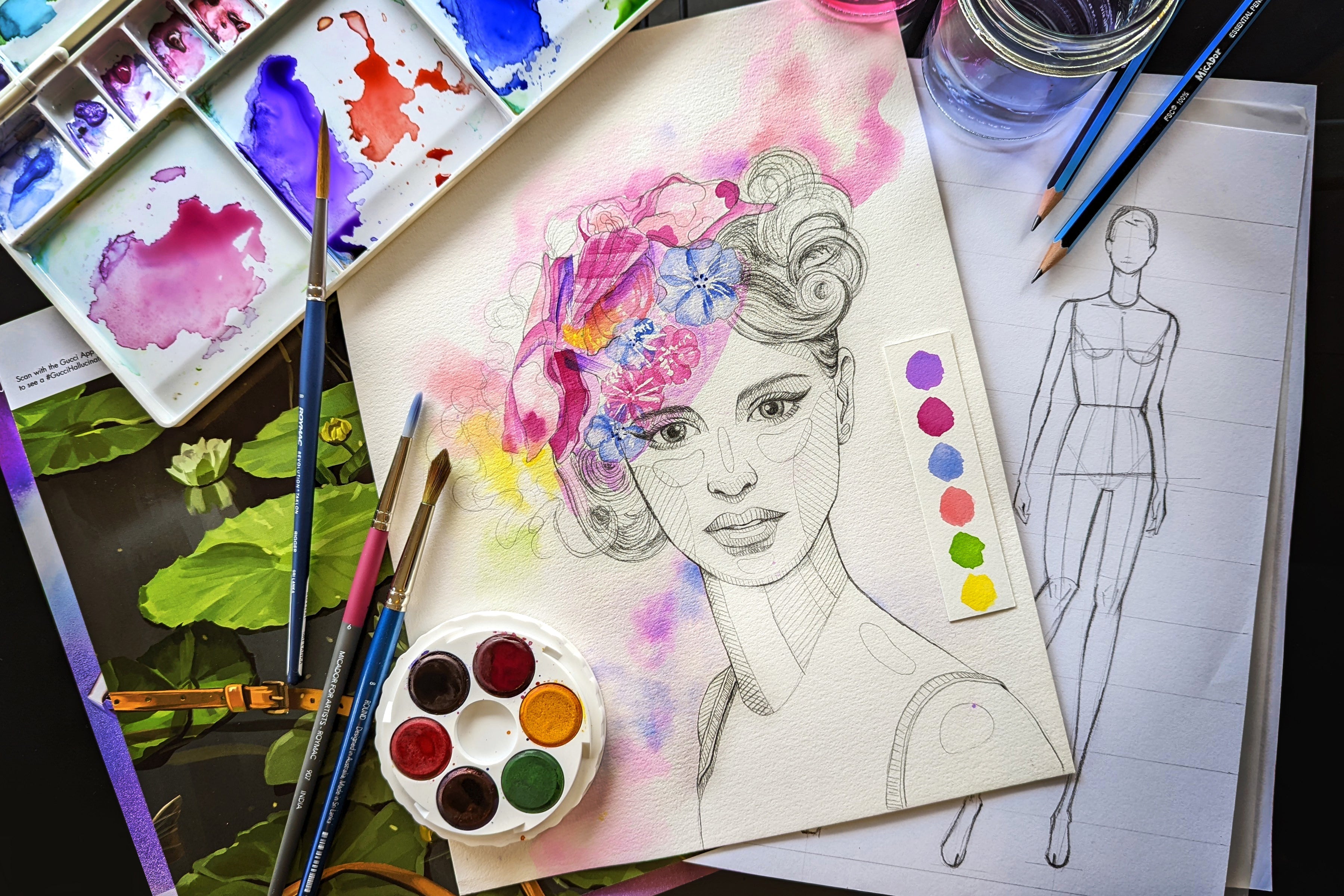
One of the products that Micador distributes to Australian artists and educators is the Koh-I-Noor watercolour disc range. These aren't casual watercolours tossed into a student paint set. They're high-pigment watercolour compressed into individual discs, the same format that professional artists and plein air painters have used for decades.
What this product represents is the same principle that Hardtmuth discovered in 1802: consistency, reliability, and the ability to know exactly what you're getting. Every disc delivers the same colour saturation, the same handling characteristics. You can build a painting knowing that the cadmium yellow you use today will match the cadmium yellow you use a month from now.
For Australian educators, watercolour discs solve a practical problem. They're compact, they travel, they don't spill. For professional artists, they're a shorthand way to carry exactly the colours you want without the bulk of tubes. For students, they're an introduction to real watercolour painting with materials that professionals actually use.
That's the Koh-I-Noor approach: solve the problem properly, and it works for everyone.
Why Heritage Matters in a Throwaway World
We live in an era of disposable products. Pens that break, pencils that disappear, art supplies designed to be used once and replaced. Planned obsolescence isn't a bug; it's a business model. Make it cheap, make it easy, make it replaceable. The faster people consume, the more they buy.
Koh-I-Noor exists in direct opposition to this thinking. A company that's been refining pencil manufacture for 230 years isn't thinking in quarterly profits. They're thinking about the graphite-clay ratio, about whether the cedar casing is straight, about whether the lacquer finish will yellow over time, about whether the hardness grading is precisely calibrated.
Each element has been optimised across generations. Not optimised to cost less, but optimised to work better. The graphite quality. The clay selection. The firing temperature. The wood sourcing. The way the pencil feels in your hand. These are details that accumulate. A good pencil is good because someone spent decades—or in Koh-I-Noor's case, centuries—thinking about what makes it good.
When you pick up a Koh-I-Noor pencil, you're not buying a pencil. You're accessing that accumulated thinking. You're benefiting from 230 years of artists, architects, engineers, and students telling the Hardtmuth company what works and what doesn't. That feedback, that refinement, that accumulation of knowledge, is embedded in the physical object you're holding.
That's what heritage means. Not nostalgia. Not retro styling for aesthetic purposes. But actual, measurable superiority that comes from time, experience, and relentless attention to a single craft.
The Australian Gateway
For Micador, the partnership with Koh-I-Noor represents something more than product distribution. It's a gateway. Australian artists, students, educators, and professionals now have direct access to products made by a company that learned its trade when Napoleon was still alive. Products made with principles that have outlasted empires.
Micador's role is to bring that heritage into Australian studios, classrooms, and homes. To ensure that when a student in Brisbane picks up a Koh-I-Noor pencil, they're not just getting a pencil. They're getting 230 years of European craftsmanship. They're getting the same pencil that won prizes in Paris in 1900. They're getting a connection to a tradition of excellence that has never wavered.
In a world where most things are designed to be forgotten, Koh-I-Noor pencils are designed to be remembered. To be kept. To be trusted. To work better the more you use them, because they're made properly and built to last.
Ask Klumpf about pencil grades, drawing materials with provenance, or the history of the modern pencil. Micador's in-house art expert. Bottom-right of every page.
Next in this series: "The World at Your Fingertips: Replogle Globes and the Art of Cartography"
© 2026 Micador Group. All rights reserved. This article is original editorial content produced by Micador. You're welcome to link to it or quote short passages with attribution. Reproducing the article in full, or republishing it on another platform, requires written permission — amazing@micador.com.au.


Leave a comment
All comments are moderated before being published.
This site is protected by hCaptcha and the hCaptcha Privacy Policy and Terms of Service apply.