
There's a countermovement happening in studios right now. While some artists are chasing speed and volume, others are deliberately slowing down. They're working with tools and processes that demand patience, precision, and presence. This shift isn't sentimental. It's a practical response to burnout, distraction, and the realisation that process itself is the point.
The Slow Art Movement: Reframing What Matters
The slow art movement isn't new, but it's accelerating. It emerged partly as a reaction to algorithm-driven social media (where speed and novelty reign) and partly as a recognition that rushing through creative work degrades both results and wellbeing.
The core principle: slow art prioritises the experience of making over the consumption of finished work. A slow artist might spend three hours on a small charcoal study that will be seen by fifty people. A fast artist might produce thirty quick digital sketches for thousands to double-tap. Neither is inherently wrong. But they serve different purposes.
Slow practice builds observation skills, hand control, and intuition. You notice things. You develop muscle memory. Your hands learn to respond to what your eyes see without the intervention of doubt or second-guessing. This happens only through repetition and attention.
The slow art movement has real neurological backing. When you work slowly and deliberately, you activate the default mode network, the brain system associated with creativity, meaning-making, and problem-solving. When you're rushing, you're in task-focused mode. Your brain isn't creating. It's executing.
Why artists are adopting slow practice now: Burnout from comparison culture, the realisation that quantity doesn't build skill, and the discovery that the act of making slowly is therapeutic in ways that finished work alone isn't.
Japanese Brush Painting (Sumi-e): Deliberation as a Tool
Sumi-e isn't just a technique. It's a philosophy about what a brushstroke can express. Understanding how it works reveals why so many contemporary artists are turning to it.
Sumi-e uses black ink on white paper or silk. The technical constraint (one colour, one value range) forces everything to depend on mark quality, brush control, and composition. You can't rescue a painting with colour adjustment. The brush mark either works or it doesn't.
The fundamental principle: In sumi-e, every stroke is deliberate. You don't overpaint. You don't correct. You commit to each mark. This requires observation before you begin, clear intention, and muscle memory developed through years of practice. A master sumi-e artist can paint a bamboo grove in five minutes. But those five minutes represent thousands of hours of study.
Ink preparation: Traditional sumi-e uses a solid ink stick ground on a stone with water. The act of grinding ink is itself meditative and ritualistic. It forces you to slow down before you even touch the paper. Modern liquid inks work too, but they skip this preparation phase.
Brush control: Sumi-e brushes are highly responsive. A pressure change mid-stroke alters line weight, opacity, and texture. Small brushes offer precision. Large brushes demand decisiveness. Learning to control the brush requires thousands of repetitions. Amateurs often see this as limitation. Masters see it as infinite possibility.
The core techniques:
- Dry brush (broken lines, suggesting texture rather than depicting it)
- Wet brush (flowing, transparent lines)
- Loaded brush (dark edge, lighter interior, suggesting volume)
- Layering translucent washes to build value and depth
Why it's trending: Artists burnt out on hypercolour and digital oversaturation are finding meditative clarity in sumi-e. The constraint forces genuine observation. The permanence of each stroke removes the safety net of endless undo. You're present with the work, not distracted by technical options.
For contemporary artists, sumi-e offers a bridge between fine art and calligraphy. The skills transfer directly to brush lettering, expressive mark-making, and drawing.
Calligraphy: The Meditation of Letterforms
Calligraphy is experiencing a genuine revival, not as nostalgia but as a practice that demands and develops presence.
The technical foundation: Calligraphy uses broad-edged pens held at a specific angle (usually 45 degrees for Latin script). The pen angle determines stroke weight. Thick strokes occur when the pen moves perpendicular to the edge. Thin strokes occur when moving parallel. This mechanical relationship means no amount of pressure override will create thick strokes when you're moving in the wrong direction. You have to respect the tool's constraints.
Why that matters: Those constraints are freeing. You can't pretend. You either understand the mechanics or you don't. There's no fudging with pressure or speed. This clarity forces genuine learning.
Core techniques:
- Letterform structure (understanding how ascenders, x-height, and descenders relate)
- Pen angle consistency (the single most common beginner mistake)
- Spacing (between letters and between words, critical to readable work)
- Rhythm (the visual flow created by consistent letterform proportions)
The meditative aspect isn't metaphorical: Calligraphy activates the same brain states as meditation. You're focused on a single task. Your attention narrows. Distractions fade. Time disappears. This is flow state, and it's accessible to anyone willing to practise.
Essential tools: A broad-edged pen (Pilot Parallel, Lamy Joy, or dedicated calligraphy pens starting at $15), calligraphy ink (water-based), and practice paper. You can start with copy paper; quality paper comes later.
The learning curve is steep at the beginning (first 10 hours are frustrating), then flattens (you're competent by 30 hours), then steepens again (mastery requires years). Most people quit at the first steep phase. Those who push through discover a practice that sustains attention and builds real skill.

Plein Air Painting: Observation Under Time Pressure
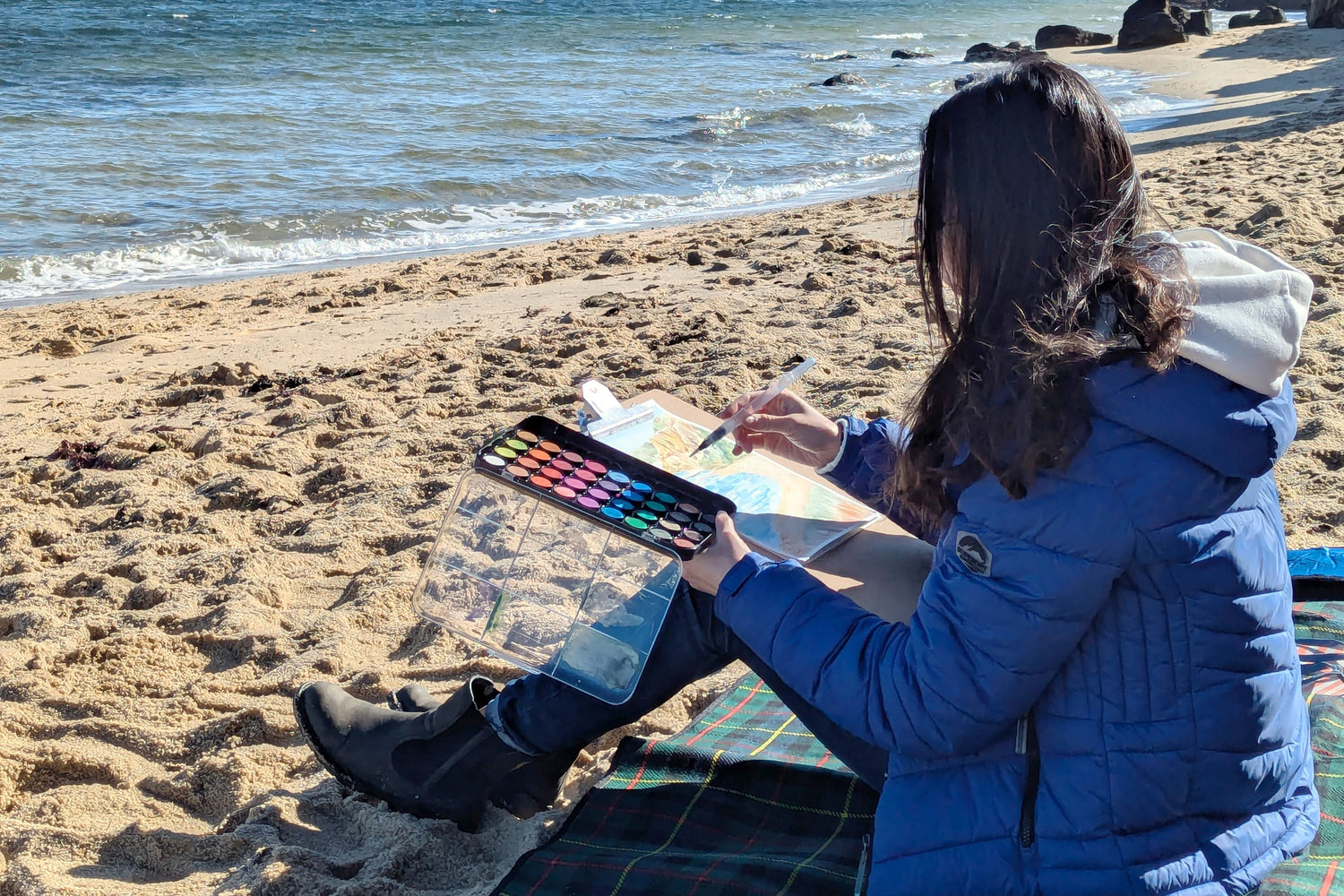
Plein air painting is landscape painting outdoors, working directly from what you see. It's trending because it accelerates skill development in ways studio painting can't.
Why plein air works differently: Outdoors, you face genuine constraints. Light changes every 15 minutes. You have limited time before the sun moves and your reference disappears. You can't rely on detailed reference photos or careful underdrawings. You have to make decisions quickly based on observation.
This time pressure forces you to prioritise. What's essential? What can you ignore? Forced prioritisation teaches visual hierarchy faster than any classroom instruction. After 50 plein air paintings, your eye reads landscape structure differently.
The technical reality: Plein air paintings are rarely finished outdoors. Professional plein air artists usually work 1.5 to 2 hours on site, then finish in the studio. This limits the work to colour notes, value relationships, and composition. It's not about completing a painting. It's about capturing the essence of the light and place.
Essential portable setup:
- Lightweight easel (French easel or pochade box)
- Limited palette (5-8 colours, forcing colour mixing)
- Pre-primed panels or small canvas boards
- Brushes (two or three, forcing versatility)
- Water container and rag
- Tonal reference (grey card or phone photo for value checking)
Why it's trending: Instagram has amplified plein air landscapes, but the real reason artists are returning to it is skill. Plein air accelerates improvement in observation, colour mixing, and decisive mark-making. You learn faster working outdoors than in a studio, because the constraints are real and unforgiving.
For artists feeling stuck in technique, plein air restarts growth. The learning curve is genuine. Improvement is visible. After a season of regular plein air work, you'll see measurable change in your work.
Urban Sketching: The Global Movement Building Local Practice
Urban sketching has become a genuine worldwide movement. Over 120,000 artists participate globally. What started as a small community in Seattle has grown because it solves a real problem: how to build a consistent drawing practice while staying engaged with the world.
The core principle: Urban sketching is location-based drawing. You sit in a cafe, park, or street corner and sketch what you see. It's not tourism art. It's a practice discipline built around observation and immediacy.
Why it's effective:
- It gets you drawing regularly (consistency builds skill)
- It forces observation (you have to see to draw)
- It creates community (sketchers in each city share work and meet up)
- It removes perfectionism (sketches are inherently imperfect, on-site captures)
- It documents experience (your sketchbook becomes a visual diary)
Essential tools: Any sketchbook, any pen or pencil, 20 minutes. That's genuinely all you need. Urban sketchers work with fountain pens, ballpoints, coloured pencils, watercolours, or just graphite. The tool doesn't matter. The practice does.
The global movement: Urban Sketchers groups exist in most major cities and many small ones. Local meetups happen regularly. Members share work online (Instagram, the USk website). There's zero gatekeeping. Complete beginners work alongside professional illustrators. Everyone draws on site. Everyone shares.
Why it's trending now: The deliberate offline practice appeals to artists fatigued by studio isolation and digital work. Urban sketching gets you out, drawing, in community. It builds skill through repetition without the pressure of producing finished work.
The Neuroscience of Slow Creative Practice: What Actually Happens
When you slow down your practice, specific neurological changes occur.
Flow state activation: Slow, deliberate work activates the default mode network, the brain system associated with creativity, introspection, and meaning-making. This is different from the task-positive network activated during fast execution. Flow states increase focus, reduce anxiety, and improve decision-making.
Default mode network engagement increases when:
- You're working on something moderately challenging (not too easy, not impossibly hard)
- You have sustained attention (20+ minutes in)
- External distractions are minimised
- You're working on something you value
This is why slow practice feels different. Your brain chemistry is actually different.
Skill consolidation: Skill building requires spacing. Massed practice (10 hours in one day) is less effective than distributed practice (1 hour daily for 10 days). Your brain consolidates motor skills during sleep. Multiple shorter sessions allow more consolidation cycles. Slow practice almost always involves spacing, while fast practice often doesn't.
Observation improvement: When you slow down, you're forced to actually see. Fast work relies on shortcuts and visual stereotypes. Slow work demands detail observation. After weeks of slow practice, your visual acuity improves measurably.
Stress reduction: Slow practice reduces cortisol (stress hormone) levels and increases parasympathetic activation (rest and recovery). This is why drawing, painting, or writing slowly feels therapeutic. It genuinely is. The nervous system shifts into a different state.
This isn't motivation or inspiration. It's neurochemistry. Slow practice literally changes how your brain functions.
These techniques and practices are trending because they address something many artists have discovered: speed and volume don't build the skills or satisfaction that deliberate, sustained practice does. A small, carefully observed painting teaches more than twenty hurried sketches. A daily plein air session for a month builds observation skills faster than a year of studio work.
The slow art movement isn't about rejection of speed or technology. It's about choosing where to invest attention. It's about recognising that the quality of your practice determines the quality of your work and, arguably, the quality of your life.
Start with one technique. Japanese brush painting, calligraphy, plein air, or urban sketching. Give it consistent attention for a month. Notice what changes. Not just in your work, but in how the practice feels.
Ask Klumpf about plein air watercolour, sumi-e, or finding a slower way to practice. Micador's in-house art expert. Bottom-right of every page.
Next in this series: "Art Without Borders: Global Trends, Sustainability and Creative Ageing"
© 2026 Micador Group. All rights reserved. This article is original editorial content produced by Micador. You're welcome to link to it or quote short passages with attribution. Reproducing the article in full, or republishing it on another platform, requires written permission — amazing@micador.com.au.


Leave a comment
All comments are moderated before being published.
This site is protected by hCaptcha and the hCaptcha Privacy Policy and Terms of Service apply.