
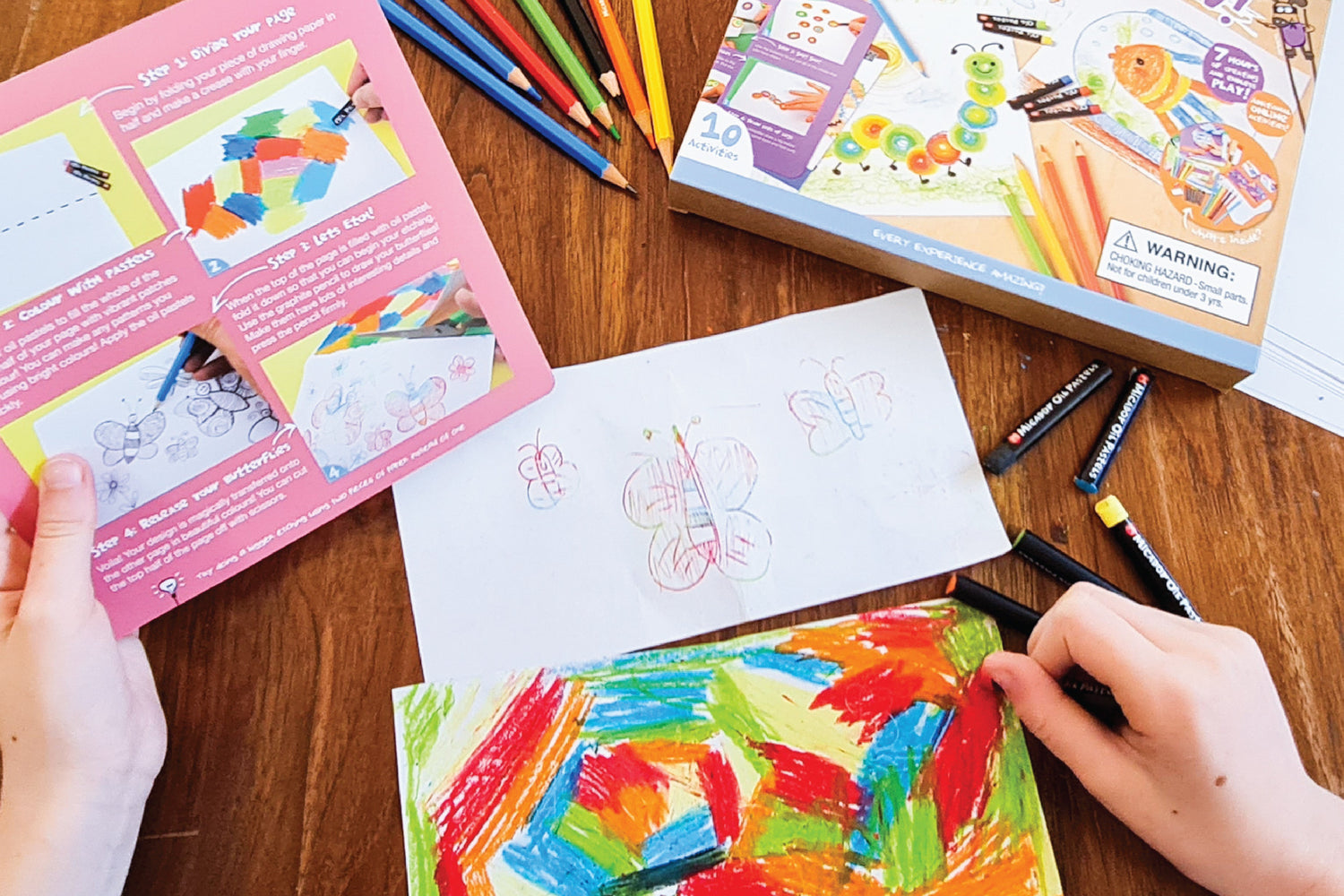
Watch a child with ADHD during a creative task they're interested in, and you might see something surprising: sustained focus for hours. Hyperfocus, as it's called, is often framed as a deficit - the flip side of attention difficulties. But in the context of art, it's a superpower.
The truth about neurodivergence and art is this: neurodivergent children aren't less able to create. They often create differently, and in many cases, they excel because their brains are wired in ways that art naturally rewards. ADHD brings hyperfocus and novelty-seeking. Autism brings pattern recognition and precision. Dyslexia brings visual-spatial processing that often surpasses typical peers. Dyspraxia brings unique perspectives, though it may require material adaptations.
Neurodivergence isn't a barrier to art. It's a different pathway to it. And when environments and materials are designed with these pathways in mind, remarkable things happen.
ADHD and the Hyperfocus Advantage
ADHD is often described as difficulty sustaining attention. But that's only part of the picture. The other part, hyperfocus, is the capacity to become completely absorbed in something that interests you, to the exclusion of everything else. Time disappears. Fatigue disappears. It's not a choice; it's an involuntary state of deep engagement.
For children with ADHD, art can be a socially acceptable, developmentally healthy channel for this hyperfocus. While a child might struggle to sustain attention through a maths lesson, they might spend three hours on a single painting, completely absorbed. This isn't evidence of motivation or willpower, it's how their brain allocates attention when the task aligns with their interests.
ADHD also correlates with novelty-seeking. Children with ADHD are often drawn to trying new techniques, new materials, new combinations. This is frequently pathologised ("Can't you finish one thing?") but it's actually the engine of creative experimentation. The same impulse that means they won't stay focused on a workbook makes them endlessly curious about whether acrylic paint mixes differently than watercolour, or what happens if you combine clay and collage, or whether painting with fingers feels different from painting with brushes.
In an art context, this restless experimentation is an asset. It drives the exploration and risk-taking that produces creative growth.
Many children with ADHD also have heightened sensory awareness. They notice colours intensely, respond to textures, and seek sensory input. Art provides an acceptable, stimulating channel for sensory needs. The thick texture of paint, the drag of charcoal, the cool smoothness of clay, these sensory experiences are genuinely regulating for ADHD brains, not distracting from the "real" work.
The key to supporting ADHD creativity is accepting the different rhythm. A child with ADHD might not create a finished painting per week. They might create four paintings in one hyperfocus session and then nothing for a month. They might mix media in ways that seem chaotic but produce surprising results. The goal isn't to create consistent output. It's to create space where their natural creative rhythm, intense, novelty-seeking, sensory-rich, is not just permitted but celebrated.
Autism and the Precision Advantage
Autistic children often approach art differently to their neurotypical peers, and those differences are frequently strengths.
Autism is associated with exceptional attention to detail and pattern recognition. Many autistic children notice minute colour variations, symmetries, and regularities that others miss. This translates directly to visual art. A child with autism might create paintings with extraordinary precision and consistency. They might develop a highly developed personal visual language, with recurring motifs and symbols that are rendered with exacting care.
Autistic visual thinking, the concept popularised by Temple Grandin, means that many autistic individuals think in pictures and visual details rather than words. This is a cognitive style that aligns naturally with visual art. Where a neurotypical child might approach a painting as a representation of an idea, an autistic child might be creating a direct expression of how their mind works. The image isn't illustrating a thought; it's the thought itself.
Many autistic children also find deep satisfaction in systematic, repetitive approaches to art. They might spend weeks perfecting a particular technique, blending a specific shade of colour, creating perfectly uniform marks, or developing a repeating pattern. Where this might look obsessive to an outside observer, it's often a state of complete engagement and mastery. The repetition itself is satisfying and calming.
Some autistic children are sensory-seeking and thrive with rich, complex sensory materials: thick paints, textured papers, clay, mixed media. Others are sensory-sensitive and need washable, low-odour, non-sticky materials with clear, non-overwhelming colour palettes. Individual sensory profiles matter far more than autism as a category. But the key insight is that sensory considerations often directly improve creative output for autistic children.
Dyslexia and Visual-Spatial Strengths
Dyslexia is a processing difference that primarily affects reading and writing. But it correlates strongly with visual-spatial strengths. Many dyslexic children see images, patterns, and spatial relationships more naturally than they process written symbols.
This is a significant advantage in visual art. While a dyslexic child might struggle with a written instruction ("Draw a person in an environment with at least three different textures"), they might excel at looking at reference images and translating them into their own artwork, or at creating complex spatial compositions intuitively.
Dyslexia also correlates with creativity. There's growing evidence that the same neurological differences that create reading challenges also drive creative thinking in visual, spatial, and kinesthetic domains. Dyslexic artists often think in bigger pictures, in possibilities, in visual wholes rather than sequential steps.
For dyslexic children, art provides a domain where their brain's natural strengths come to the fore. It's not remedial or compensatory; it's simply where their mind works best. A child who can't spell "perspective" might create artwork that demonstrates sophisticated spatial understanding. A child who can't read instructions might intuitively understand colour theory and composition by experimenting and observing.
Dyspraxia: Fine Motor Challenges and Adaptations
Dyspraxia affects coordination and motor planning. For children with dyspraxia, the physical act of creating art can be challenging. Holding a pencil, controlling brush pressure, maintaining posture, planning multi-step movements, these require intact motor control.
This doesn't mean dyspraxic children can't create art. It means the materials and environment need to be adapted to work with, rather than against, their motor profile.
Grips matter enormously. Easy Grip and Secure Grip options from Micador's Timeless range are designed to reduce the hand strength required to create marks. A chunky grip is easier to control than a thin one. A pen with balanced weight is less tiring than a lightweight marker. Non-slip surfaces—boards with grips, mats that don't slide, reduce the coordination demand.
Posture and positioning also matter. A dyspraxic child might create more effectively sitting on the floor with paper on a board, or standing at a vertical easel, than sitting at a table. Some children benefit from weighted vests that improve proprioceptive input. Others need breaks to reset their motor planning.
The materials themselves should be forgiving. Watercolour on paper is less frustrating than fine-tip pen if the child's motor control is unpredictable. Chunky pastels are better than thin ones. Clay and sculpture often work beautifully for dyspraxic children because precision is less critical to the final result—the material is inherently more forgiving.
When these adaptations are in place, many dyspraxic children create with confidence and genuine pleasure. The challenge wasn't artistic ability; it was the mismatch between their motor profile and standard materials.

Sensory Profiles: Seeking vs. Sensitive
Beyond specific diagnoses, sensory profile matters enormously for all children, but especially for neurodivergent children.
Sensory-seeking children crave input. They love textured materials, rich colours, varied tactile experiences. For these children, art is inherently rewarding. Finger painting, clay, collage with textured papers, mixing thick paints—these activities provide the sensory input their nervous system is seeking. Art becomes a channel for appropriate sensory engagement.
Sensory-sensitive children are overwhelmed by intense sensory input. Strong smells, sticky textures, bright colours, unexpected tactile sensations—these can be activating and distressing rather than enjoyable. For these children, the typical art classroom (with its open paint containers, finger-painting activities, and bright posters) can be overwhelming.
But sensory-sensitive children can absolutely create art when materials are matched to their profile. Washable, low-odour paints reduce the sensory load. Smooth papers are preferable to textured ones. A palette of softer, less saturated colours is less overwhelming than neon brightness. Clay can be soothing for sensory-sensitive children when it's worked in small quantities and the session is quiet and predictable.
The key is asking: what does this child's nervous system need? Not all sensory-sensitive children need the same adaptations. One child might be sensitive to odour but fine with tacky textures. Another might be the opposite. Individual observation and flexibility matter far more than assumptions based on diagnosis.
Executive Function Scaffolding
Many neurodivergent children have differences in executive function—planning, sequencing, task initiation, working memory. Open-ended creative tasks ("Make whatever you want") can feel paralyzing rather than liberating for a child with weak executive function.
Structure actually enables creativity for these children. Visual schedules that show the steps of a project ("1. Choose your colours. 2. Mix your paint. 3. Paint the background. 4. Paint the details.") reduce the cognitive load. Clear, consistent routines ("We always start with choosing materials") create predictability. Step-by-step breakdowns, even when they're provided verbally or visually, allow the child to focus on the creative act itself rather than planning the execution.
This isn't limiting creativity. It's removing the barrier that prevents neurodivergent children from accessing their creativity in the first place. With the executive function demands removed, the child can focus on the actual creative work.
Many neurodivergent children also benefit from choice within structure. Rather than "Make whatever you want," try "Today we're exploring colour mixing. You can mix these three colour combinations: red and yellow, blue and yellow, or red and blue." The structure provides the necessary scaffolding; the choice preserves autonomy and engagement.
NDIS and Art Therapy
In Australia, art therapy is recognised as a legitimate therapeutic intervention and is NDIS-funded. The funding rate is typically $156.16 per hour for one-to-one art therapy delivered by an NDIS-registered provider.
To work with NDIS funding, art therapists must be registered with professional bodies like ANZACATA (Australian and New Zealand Art Therapy Association) or hold equivalent qualifications. The key difference between art therapy and recreational art is the therapeutic intent and the therapist's training in both creative process and psychological/developmental theory.
For families of neurodivergent children whose NDIS plans include funding for therapy or skill development, art therapy can be a powerful option. It's not remedial. It's a structured pathway to developing confidence, sensory regulation, emotional expression, and creative skills.
Material Recommendations by Profile
For ADHD: Varied textures, multiple colour options, tactile materials (clay, collage), low-odour paints if possible. Acceptance of mixed media and non-traditional approaches. Regular availability of materials to support frequent creative bursts.
For autism (sensory-seeking): Rich textures, varied tactile experiences, opportunities for repetitive mark-making, thick paints, chunky materials. Consistent materials and routines that allow for mastery.
For autism (sensory-sensitive): Washable, low-odour paints, smooth papers, softer colour palettes, predictable routines, minimal sensory surprises.
For dyslexia: Reference materials (photos, images) in addition to or instead of verbal instructions, opportunities to create from visual observation, mixed media options that allow for spatial exploration.
For dyspraxia: Easy Grip or Secure Grip markers, chunky pastels, non-slip surfaces, materials that are forgiving of imperfect control, weighted or balanced tools.
For executive function differences: Visual schedules, step-by-step instructions, choice within structure, consistent routines, clear communication about what the session will involve.
The Core Insight: Difference, Not Deficit
Neurodivergence is difference, not deficit. A neurodivergent child's brain doesn't work worse; it works differently. And in the creative domain, different often means advantaged.
The critical infrastructure for supporting neurodivergent creativity isn't complex. It's primarily a shift in perspective: designing environments and providing materials that work with children's brains rather than against them. Accepting hyperfocus as a gift rather than a problem. Recognising precision and repetition as strengths rather than rigidity. Providing structure that enables rather than restricts. Matching materials to sensory profiles.
When that happens, neurodivergent children often don't just create art. They create work of genuine sophistication and originality. Not in spite of their neurodivergence, but often because of it.
Ask Klumpf about neurodivergence-friendly materials, sensory-considered art, or supporting different ways of making. Micador's in-house art expert. Bottom-right of every page.
Next in this series: "Grandparents as Creative Partners: Building Intergenerational Art Connections"
© 2026 Micador Group. All rights reserved. This article is original editorial content produced by Micador. You're welcome to link to it or quote short passages with attribution. Reproducing the article in full, or republishing it on another platform, requires written permission — amazing@micador.com.au.

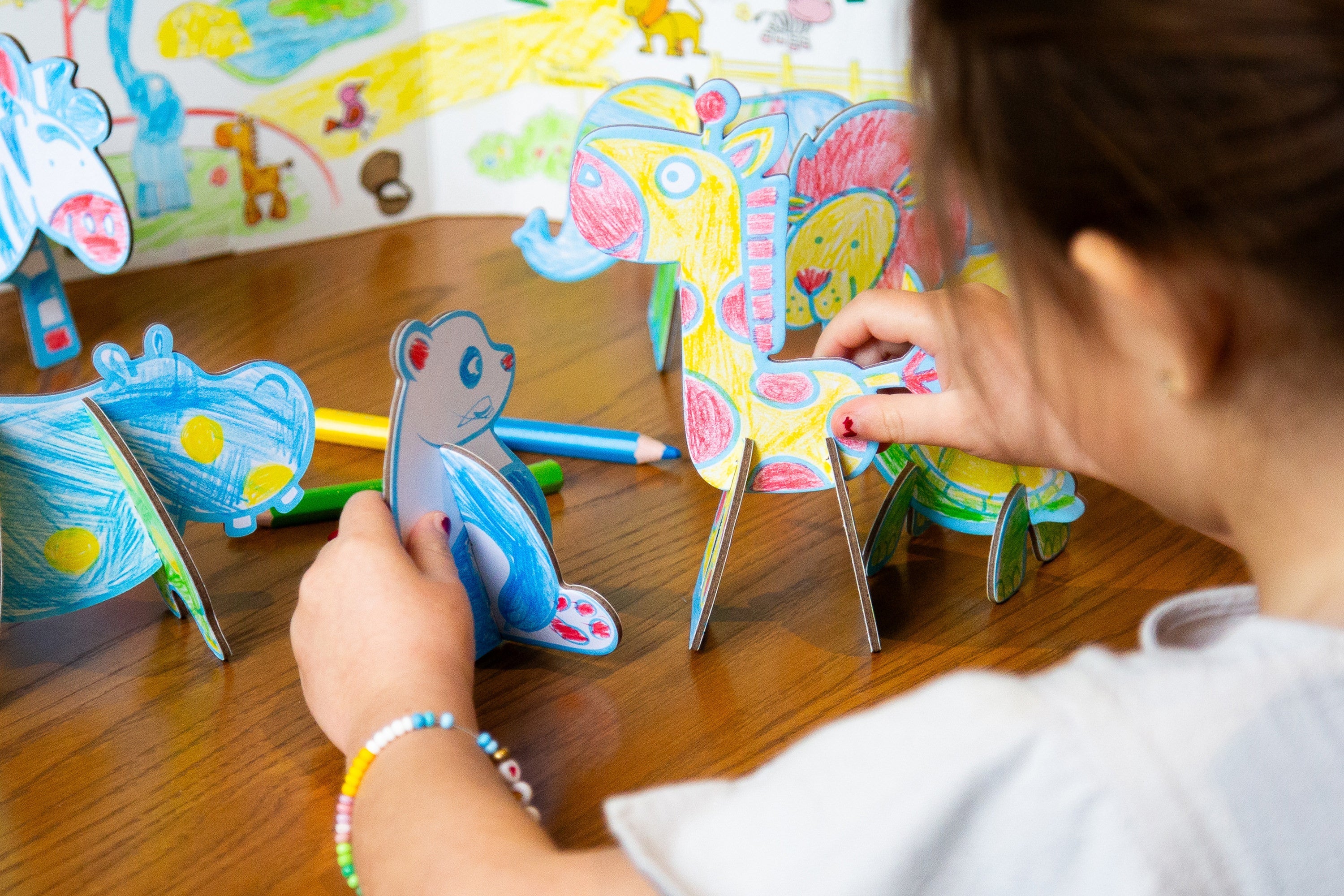

Leave a comment
All comments are moderated before being published.
This site is protected by hCaptcha and the hCaptcha Privacy Policy and Terms of Service apply.